Calling them the good peptides takes some nerve
I expected an immune booster. The experiments that intrigue me involve an immune response with a capacity for restraint.
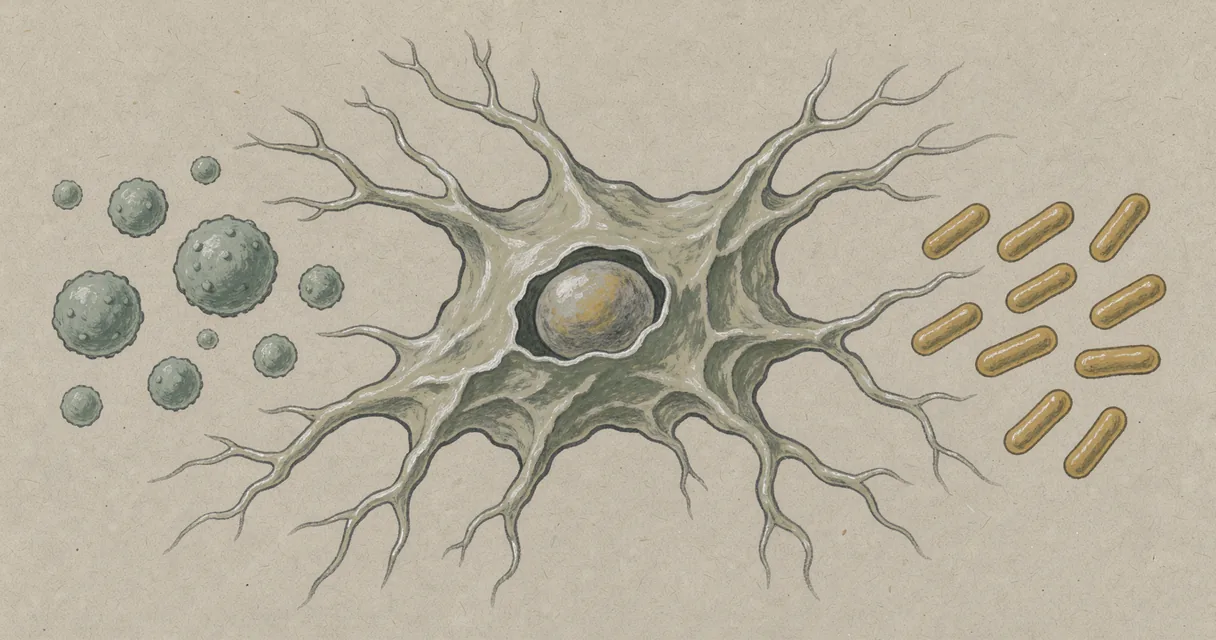
An immune cell, differently provoked
For me, the adjective runs straight into this experiment. In a study of human monocyte-derived dendritic cells grown in the laboratory, thymosin alpha-1 enhanced responses to viral stimuli and dampened responses to bacterial stimuli. The direction changed with the provocation.
The change of direction appeals to my contrary streak. Calling something good becomes a difficult judgment when a useful response might involve either more activity or less. I like the difficulty. It gives this pleasantly confident name something to answer for.
The quieter activity appears elsewhere too. In laboratory work with blood cells from people with relapsing-remitting multiple sclerosis, thymosin alpha-1 expanded regulatory B-cell subsets and shifted the measured signals towards an anti-inflammatory profile. These were cellular experiments, with the cells stimulated through TLR7. The result gives restraint a concrete place in the story.
Regulation in the gut
A mouse experiment makes that restraint particularly tangible. During CTLA-4 blockade, a form of cancer immunotherapy, thymosin alpha-1 prevented intestinal immune toxicity through an IDO1-dependent pathway in the gut. The researchers reported that IDO1 was not induced in the tumour environment. The location of the regulatory response was central to the proposed explanation.
I had imagined spending most of my time on stimulation. Instead, this possibility of local restraint seems essential to understanding why the molecule deserves attention. The immune-response essay follows the cell work into that mouse experiment.
At the bedside
The adjective becomes harder to award in human cancer research. A randomised metastatic melanoma study found more tumour responses and a numerically longer median overall survival when thymosin alpha-1 was added to treatment. The authors treated the survival findings as suggestive and worth further study. A systematic review found no statistically significant pooled overall-survival benefit for thymosin alpha-1.
Returning to an elegant cell experiment offers me no comfort about that uncertainty. It changes the claim that can reasonably follow the biology. The cancer chapter brings the mouse gut, human tumour responses and survival results into the same conversation; the hepatitis chapter turns to viral markers and the effects of accompanying treatment. Clinical benefit remains an open question alongside the fascinating biology.